By Namkoo
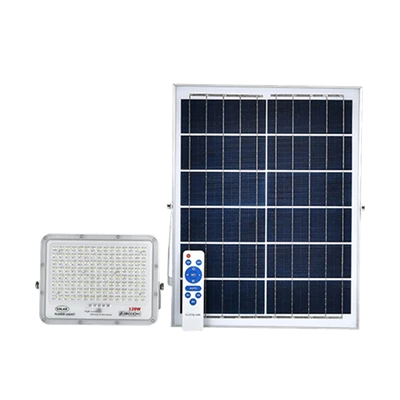
Solar powered industrial flood lights serve yards, compounds, warehouses, loading zones and remote work areas where grid power is unavailable or costly. Namkoo recommends sizing the system from the required illuminated area and operating schedule rather than choosing a kit by advertised wattage alone.
Start with the Project Duty
For industrial facility managers, EPC contractors and off-grid project buyers, the first task is to define what the solar powered industrial flood light must achieve at the site. Record measurable requirements before choosing a catalogue model. This keeps the lighting, energy, structure, communications and commercial scope connected to the same operating case.
- Target area, mounting points, working plane and minimum lux.
- Nightly operating hours, full-output periods and sensor strategy.
- Site coordinates, worst-month solar resource and shading.
- Temperature, dust, rain, salt exposure and security conditions.
- Maintenance access, cable distances and preferred battery location.
Separate confirmed requirements from provisional assumptions. Mark every value that the owner, designer or local authority must approve. Suppliers can then price a compliant base proposal and list alternatives without hiding technical differences.
Build a Complete System Specification
A reliable solar powered industrial flood light is an assembly of matched parts. The quotation should identify each principal component, its function, model or performance requirement and the party responsible for integration. At minimum, review the following items.
- Asymmetric or wide-beam led floodlight with tested photometry.
- Solar array sized for worst-month daily energy.
- Lifepo4 battery with protected usable capacity.
- Controller with timed dimming, motion sensing and protections.
- Pole or wall structure, weatherproof enclosures and cables.
Ask for drawings and data sheets that match the offered configuration. Generic brochures are useful for orientation, but they do not replace project-specific dimensions, settings, calculations and bills of material.
Compare Offers on the Same Basis
Normalize bids before comparing price. Confirm that quantities, ratings, accessories, documentation, packing, delivery basis and warranty duties are equivalent. Where one bidder proposes an alternative, record its effect on performance, installation and maintenance.
| Review area | Items to define | Evidence to request |
|---|---|---|
| Area lighting | Dimensions, target lux, uniformity, glare | Lighting layout and IES file |
| Energy demand | Power profile and operating hours | Daily load in Wh |
| Solar input | Worst-month peak-sun-hours and losses | Array calculation |
| Storage | Usable Wh, autonomy, temperature factor | Battery calculation |
| Installation | Mounting, cabling, enclosure, security | Drawings and bill of materials |
Use a compliance schedule with “complies,” “deviation” and “not included” columns. This makes omissions visible and prevents a low initial figure from becoming an expensive variation after award.
Check Design and Installation Risks
Most project failures can be traced to an unclear design input, an interface owned by nobody or an assumption that was never tested. For this solar powered industrial flood light project, pay particular attention to:
- Using narrow beams that create bright spots and dark working areas.
- Mounting the panel in shade or at an unsuitable tilt.
- Placing the battery where heat shortens service life.
- Assuming motion sensing can replace a defined base-lighting level.
- Omitting cable voltage drop, surge protection and enclosure details.
Resolve these points during design review. A supplier should explain the calculation method, limiting condition and safety margin instead of offering only a pass/fail statement.
Review Performance Under Real Site Conditions
Rated values are only the starting point for a solar powered industrial flood light. Ask how temperature, voltage variation, dust, rain, corrosion, shading and component ageing affect the result. The proposal should state the design condition, the losses included in each calculation and the maintenance factor used for long-term performance. This allows reviewers to distinguish verified capacity from optimistic catalogue data.
Where local standards define lighting, structural, electrical or communications criteria, list the exact edition and responsible approval authority. If no mandatory value applies, record the project target and the reason it was selected. Every calculation should use the same approved inputs, units and drawing revision.
Control Interfaces Between Suppliers
Outdoor infrastructure often divides responsibility among the equipment factory, civil contractor, electrical installer, network provider and software integrator. Prepare an interface matrix showing who designs, supplies, installs, terminates, configures, tests and warrants each connection. Include foundations, conduits, cables, earthing, data links, SIM cards, licences and commissioning tools.
Interface control is especially important when locally sourced items are combined with imported equipment. Confirm connector types, cable lengths, bolt patterns, voltage and protocol compatibility before production. A coordinated drawing review costs less than site modification and protects the planned installation schedule.
Evaluate Price Through Lifecycle Cost
Compare more than the purchase price. Installation labour, civil work, energy, network fees, inspections, replacement parts, access equipment and expected maintenance all affect lifecycle cost. A lower-cost product may be suitable when it satisfies the same duty and support requirements; a cheaper incomplete scope is not an equivalent offer.
Ask bidders to separate optional functions and recommended spares. Record the expected service interval and the replaceable modules. This gives the owner a practical basis for budgeting and avoids locking the project into undocumented parts or accounts.
Use Samples, Drawings and Acceptance Tests
Approve a representative sample after the technical schedule is stable. Record model numbers, finish, labels, settings, connectors and accessories. If the project includes software or controls, test the production interface and user roles rather than a separate demonstration account.
Factory acceptance should cover dimensions, appearance, electrical safety, programmed behavior and the agreed functional tests. Site acceptance should confirm installation quality and real operating performance. Keep photos, serial numbers, test results and approved revisions with the project file.
Plan Delivery and Long-Term Service
Confirm packing method, package dimensions, shipping marks, loading quantity and protection of coated surfaces. The delivery schedule should include drawing approval, sample approval, production, inspection and transport rather than showing only factory lead time.
Define spare parts, response times and warranty procedures before ordering. The owner should receive operating instructions, wiring diagrams, settings, inspection records and as-built information in a format that remains usable after the warranty period.
Buyer Checklist
- Freeze the site inputs and acceptance targets.
- Approve a complete component and accessory schedule.
- Review calculations, drawings and interface responsibilities.
- Inspect a representative sample before bulk production.
- Record packing, delivery, commissioning and warranty scope.
FAQ
How much wattage is needed for an industrial yard?
It depends on area, mounting height, optics and target lux; a lighting calculation is more reliable than a wattage rule.
Can the system operate all night?
Yes, if the energy balance includes the full dimming schedule and conservative seasonal losses.
Is PIR control suitable for security lighting?
It can raise output when movement is detected, while a lower background level maintains orientation and camera visibility.
Where should the battery be installed?
Use a secure, ventilated and serviceable position within the manufacturer’s temperature and cable-length limits.
What should be tested before acceptance?
Confirm charging, night switching, dimming, sensor coverage, illuminance, protections, weather sealing and mounting stability.
Send Namkoo your site plan, performance target, quantities and delivery location. Our team can review the project brief, identify missing inputs and prepare a transparent proposal for the complete solar powered industrial flood light scope.

Get Best Solar Lights
Join the Namkoo Solar Lighting Newsletter for product updates, buying guides and project advice on solar street lights, solar flood lights and outdoor solar lighting.